6Mo steel is a super-austenitic stainless steel with six percent molybdenum (Mo). 6Mo has become an important alloy group for industrial applications, especially in the process industry, seawater technology and chemical production. This article discusses the metallurgical properties, corrosion resistance and design advantages of 6Mo steel, about the production processes, specifications and what are the advantages of using 6Mo.
Austenitic stainless steel is a type of stainless steel that has a special microstructure called austenite, which is formed at high temperatures. Austenite is a crystal structure that gives steel a number of desirable properties, such as good formability without cracking, good corrosion resistance, and high strength.
The most common type of austenitic stainless steel is 18/8 steel, also known as 304 steel , which contains approximately 18 percent chromium and 8 percent nickel. This type of steel is highly resistant to rust and corrosion, especially in environments where there is a lot of moisture or in contact with various chemicals.
.jpg)
Like austenitic stainless steels, super-austenitic stainless steels are also highly ductile; they have excellent toughness, high strength, excellent corrosion resistance, good weldability and excellent formability. Super-austenitic stainless steels are typically used where higher corrosion resistance is required, particularly protection against chloride corrosion and crevice corrosion. Super-austenitic stainless steels are defined as austenitic iron-based alloys with a PREN value greater than 40.
6Mo is a group of super-austenitic stainless steels, which includes alloys 254 SMO™, AL-6X™, AL-6XN™, 1925 hMO (25-6MO), and 20 Mo-6™.
These alloys are known for having a high content of molybdenum and nitrogen, which provides solid resistance to corrosion. Especially in chloride-containing environments, such as offshore and marine, industry, salted roads, pools or desalination plants.
Molybdenum increases resistance to pitting corrosion (small holes in the surface) and stress corrosion cracking, while nitrogen adds increased strength and even stronger corrosion resistance.
An important property of 6Mo steels is their resistance to chloride stress corrosion cracking (SCC). SCC is particularly prevalent in chemical process environments and seawater.
Compared to the common 300 series stainless steels (304L, 316L, 321, 347 etc.) which are austenitic stainless steels, the 6Mo steels show a great improvement in corrosion resistance by increasing molybdenum and nitrogen content.
6Mo steel has a higher purchase price, but often pays for itself through reduced maintenance and less downtime.
In environments with high levels of chlorides, such as in seawater and chemicals, 6Mo steels provide very good protection against cracking, compared to other common stainless steels.
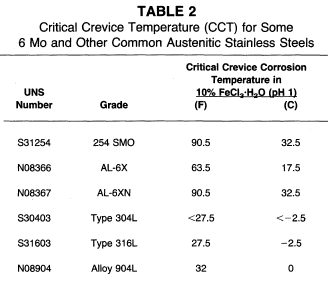
Field experience shows that 6Mo steels are highly resistant to stress corrosion cracking in sodium chloride environments. Examples of this include the use of 254SMO™ in paper bleaching plants and seawater industries, where the material has been in service for decades without any stress corrosion cracking problems.
The 6Mo steels are produced using the same production equipment used to produce the common 300 series alloys. Despite the high alloy content of 6Mo, it can be produced at a lower cost than many of the nickel-based alloys (although it is often more expensive than the common 300 series alloys, such as 316L).
This means that these steels are used in industry where both corrosion resistance and cost-effectiveness are crucial.
The strength of 6Mo steels is up to 50 percent higher than, for example, traditional 316L steels.
This means that the steel can be used with reduced material thickness, which lowers both production costs and weight. This is a major advantage in industries that require light but strong materials, such as in pipelines and heat exchangers.
6Mo steels are available in several forms, including plates, tubes and wear parts. You can find these steels according to various standards, both for stainless steel and for metals with high nickel content.
ASTM, ASME, and UNS are among the most important specifications for these alloys, which regulate the composition and mechanical properties of the materials.
The choice of specification depends on the specific application and the customer's requirements for corrosion resistance, strength and processing.
As previously mentioned, the use of 6Mo is popular in the process industry, especially in environments where traditional stainless steels have failed due to pitting, stress corrosion cracking or chloride stress corrosion cracking.
Typical applications for 6Mo are equipment such as crystallizers, mixing tanks, pressure vessels, containers, evaporators, heat exchangers, pipelines, and pumps and valves. 6Mo steel is also used in seawater-cooled condensers, nuclear power plants, and in flue gas desulfurization (reducing sulfur oxides in flue gases - also known as FGD).
6Mo steel is a popular choice for engineers and designers due to the steel's ability to resist corrosion, its high strength, and its ease of machining.
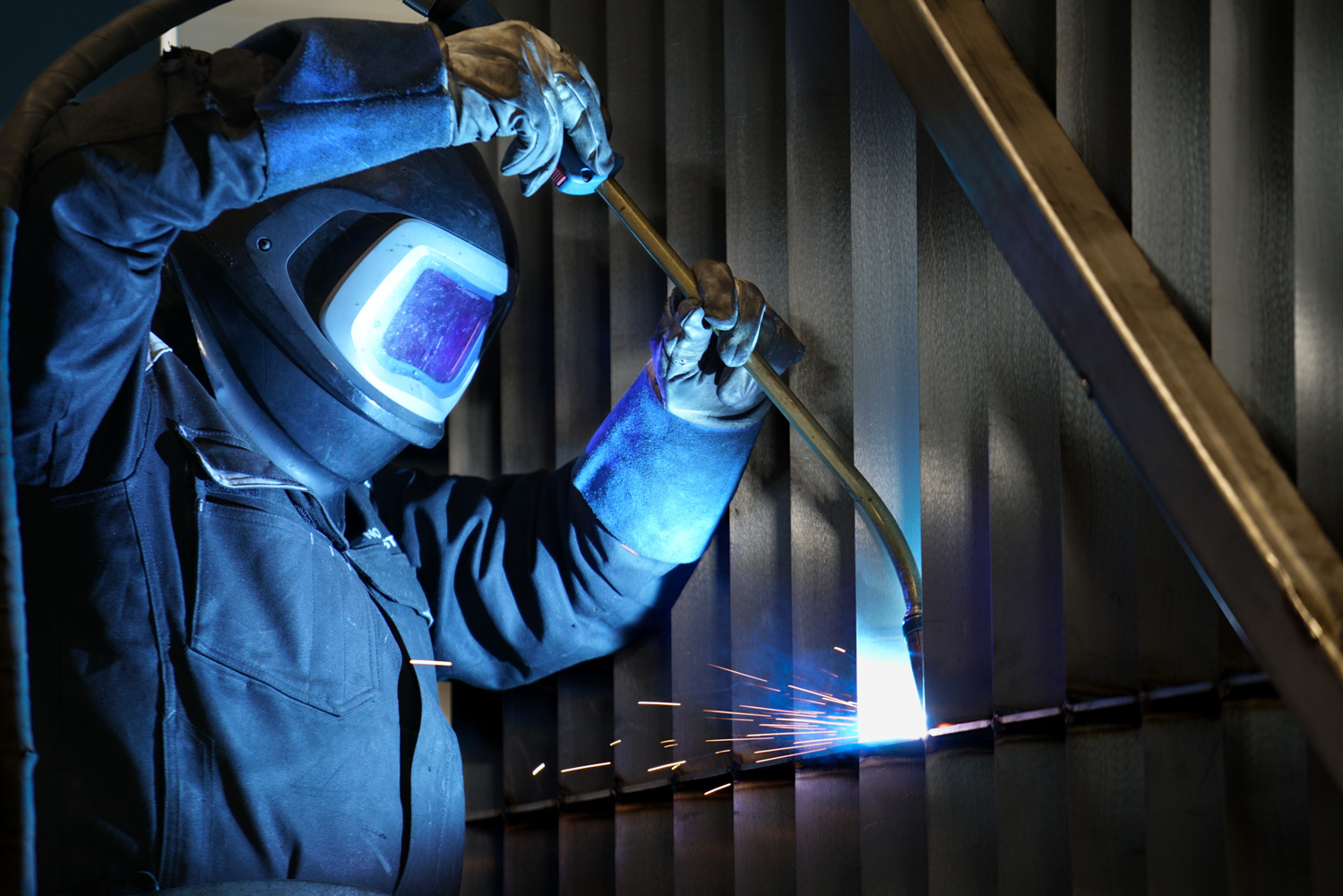
Welding these steels requires special considerations, especially due to high alloy content, and tendency for molybdenum segregation (molybdenum accumulating in the weld joint) during welding.
Molybdenum segregation can lead to reduced corrosion resistance, poorer mechanical properties or uneven structural composition.
Therefore, it is essential to use filler metals that are sufficiently superior in molybdenum to ensure that the weld has the same corrosion resistance as the base metal. Common filler metals include alloys 625 and C-276, which provide excellent corrosion resistance.
To maintain corrosion resistance during welding, a full tempering process and water quenching should be performed after welding. This reduces the risk of sigma phase formation (a weak and brittle part of the metal that can occur if you have too high a temperature for a long time).
Sigma phase can lead to material failure and corrosion problems. To avoid sigma phase, you can quickly cool the material after heating, or adjust the alloy composition (such as increasing the nickel content).
Do you have any questions about 6Mo, or other things you're wondering about?
Contact us on our website.

Sources: NiDI (Nickel Development Institute)



