The steel we use comes with material certificates, which are important documentation for the steel. However, material certificates are not enough, as mislabeling, material confusion or, in the worst case, forged certificates can occur.
That is why it is so important that we always have control over the steel, and have routines to ensure that we use the right material. We check that the steel type is exactly the type we need in our projects. We check that the material matches the requirements that have been specified. One method we use to determine if it is the right material quality is positive material identification (PMI).
Now you will learn more about how it works and how we work with it. At Nordic Steel, you can be sure that you will get the quality you deserve, as we have the routines, expertise and equipment to check that the materials we use meet the requirements.
We buy all the steel we use from experts in it, either as wholesalers or directly from steel mills. When the steel comes to us, it is most often in the form of plates, beams or pipes. From this we create fantastic structures and products, small or large, in series of many or just one.
If we are going to make equipment that will be installed on the seabed, it must withstand extreme stresses, both from pressure and corrosion. Water treatment equipment for aquaculture on land must withstand much of the same, but it must also be good for live fish. Tanks must withstand waste. Ventilation ducts must provide safe and fresh air. Suspension systems must withstand a lot of weight.
For this, we must choose the right steel. We do this in advance, when we plan, design, test and choose the right materials. So that it has the right strength and can withstand what is needed.
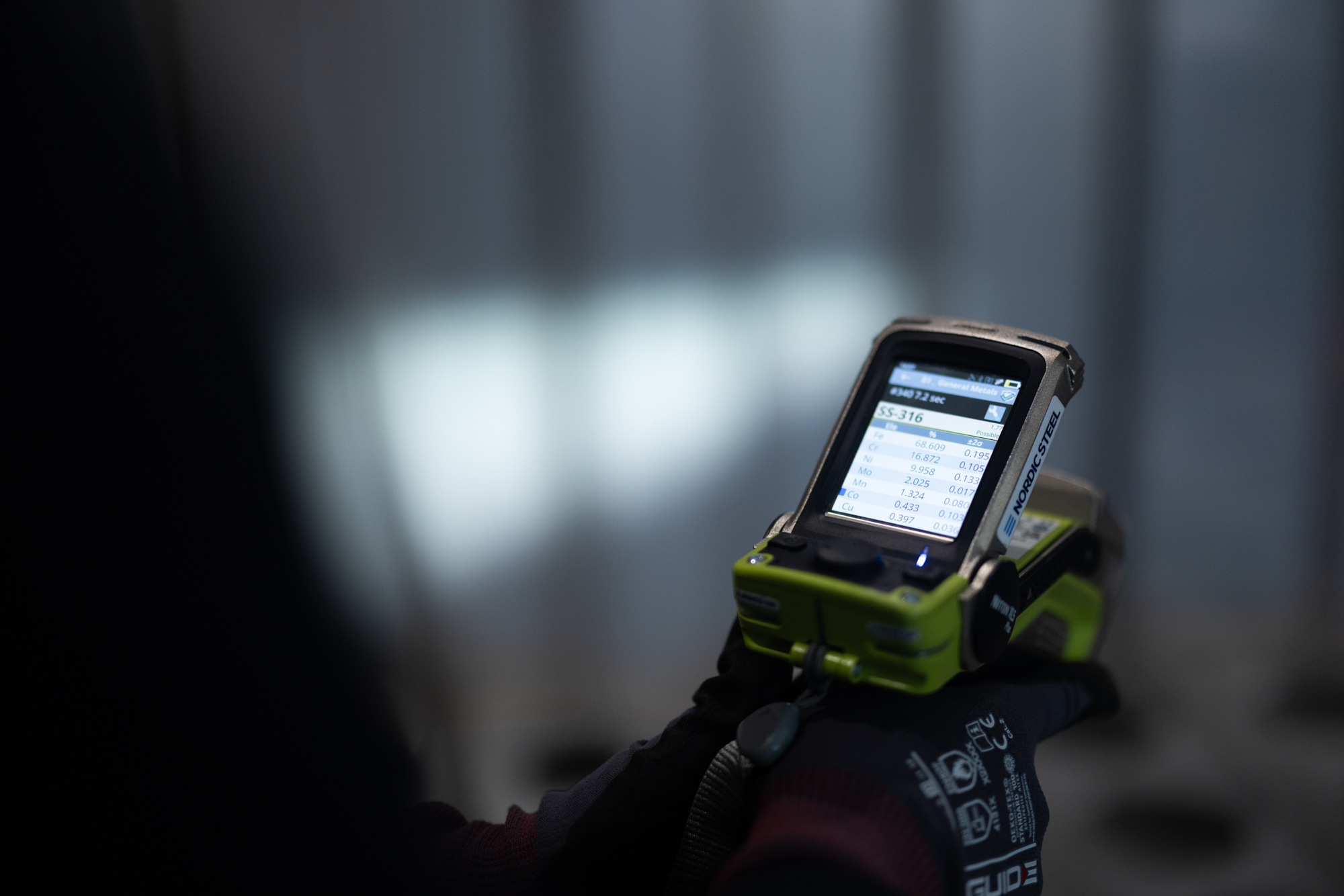
But how do we know the material is right when we get it? Different types of stainless steel can look quite similar. Even if the material is marked with rust-resistant 316 steel, we cannot confirm the material quality just by looking at it. Differences in alloy composition can have a big impact on the corrosion resistance of the material. With PMI we ensure that the right material is used. Then we can check different alloys in the material, and check whether it matches the quality we expect.
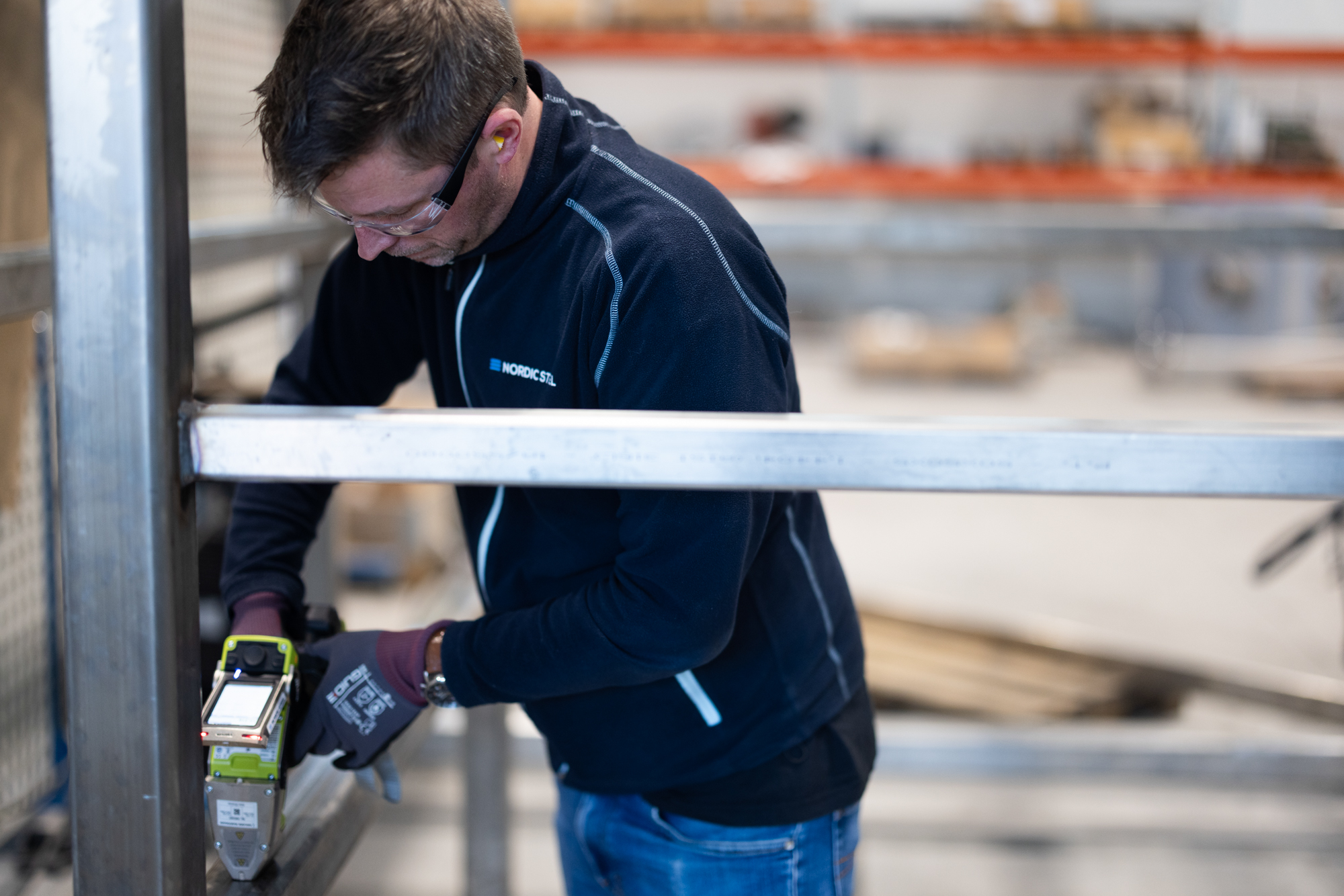
Positive Material Identification (PMI) is a method that uses X-ray technology to identify and verify metallic materials, based on the composition of the alloys in the material. PMI is therefore used for the identification of materials, and confirmation that the alloys match what is stated in the material specification. The method is not a substitute for a material certificate or full chemical laboratory analysis.
Nordic Steel's procedures at PMI include both X-ray fluorescence (XRF) and optical emission spectroscopy (OES). XRF does not normally affect the surface of the material, while OES may leave a small mark in the test area.
The different techniques we use to check positive material identification:
PMI is used in many different industries, and it has many advantages:
NS 5855:2022 covers positive material identification (PMI) of metallic materials and welded joints. The standard applies to PMI that is performed upon receipt of materials, during fabrication, and as part of final inspection.
The standard sets requirements for personnel and training, calibration of PMI equipment, how to perform a PMI, and content in PMI procedures and reports.
The correct material quality is important for the material to have the properties for which the design is specified, such as corrosion resistance and mechanical properties. PMI helps to confirm that the correct material quality has been used.
Using the wrong material quality can have technical and financial consequences. PMI is therefore an important tool to reduce the risk of material mix-ups and using the wrong material quality.
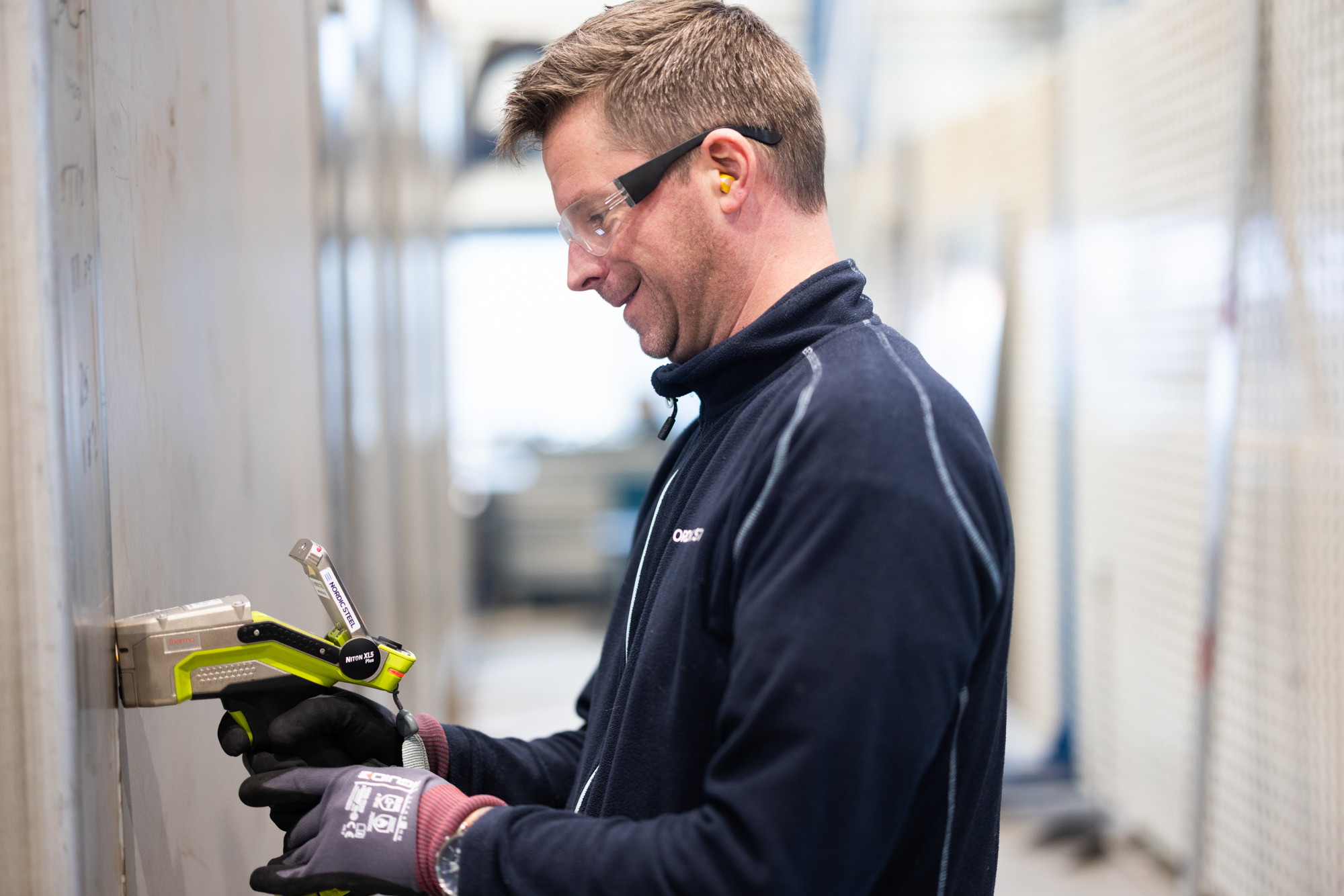
The use of PMI depends on specified requirements, current scope of control, and needs of the project.
PMI may be relevant, among other things, in the following cases:
At Nordic Steel, PMI is carried out in accordance with current procedures and specified project requirements. NS 5855:2022 provides requirements and guidelines for, among other things, personnel, equipment, implementation and reporting of PMI.
At Nordic Steel, we work with quality at every level. Through established control routines, material traceability and the use of technology such as PMI, we work systematically to ensure that the right material is used for the right purpose. For customers, this means increased security, reduced risk and confidence that the products we deliver meet the agreed requirements.
Sources: NS 5855:2022 – Positive Material Identification (PMI) of Metallic Components and Welded Joints, Nordic Steel NS-PMI-01 – PMI Procedure, Rev. 00, Standard Norway



