The welding procedure is a document that describes how a welding operation should be performed to achieve documented quality. It can be used on several products within a defined qualification area. The procedure tells you in short how to weld, with which welding method and which material.
There are actually incredibly thorough preparations, with strict requirements for quality and mechanical properties that lie behind a welding job. Here we will take you through how we prepare, and how we work with the welding profession. You will also become familiar with the terms WPS and WPQR, which are absolutely central to welding.
At Nordic Steel, we weld advanced structures for industries such as oil and gas, renewable energy, defense and aerospace, and aquaculture. For these industries, the structures must withstand heavy loads, extreme environments, and a long service life. It is therefore not enough for a weld to “look good.” The quality must be documented and traceable. You as a customer can be confident when we have strict routines and recipes for welding.

In order to weld products and structures that must withstand special requirements, a welding procedure is necessary and important. A procedure also ensures that you get the same result, regardless of who is welding, as long as that person is qualified to perform the work.
In the welding procedure you will receive information about:
At Nordic Steel, we have our own team, with a welding technical manager and two welding inspectors, who ensure that the welding work is of high quality. They plan welding work, develop welding procedures and perform quality control before, during and after welding. In addition, they check material certificates, follow up the welders and help them choose the right welding methods.
The qualified welding procedures also follow a welding specification or standard. In practice, there are two central documents that are linked, WPS (Welding Procedure Specification) and WPQR (Welding Procedure Qualification Record). We will now look at that, in addition to material testing of weld samples (NDT and DT).

The Welding Procedure Specification (WPS) is the actual recipe for the welding job. It states how a welding job should be performed in practice, to satisfy requirements for quality and mechanical properties. A WPS gives you an overview of which parameters to use, type of materials, and which requirements apply to preheating, welding position and post-treatment.
A WPS is written before production begins and is the actual work instruction for the welder performing the job. The document helps ensure that the weld is of the required quality and strength.
Both ISO/EN and ASME standards define a set of essential procedure variables. Changes in these variables can affect the quality and mechanical properties of the weld. Changes in essential variables defined in the relevant standard may require requalification of the welding procedure.
A WPS is prepared on the basis of what has been approved in the WPQR. We will now become more familiar with this.
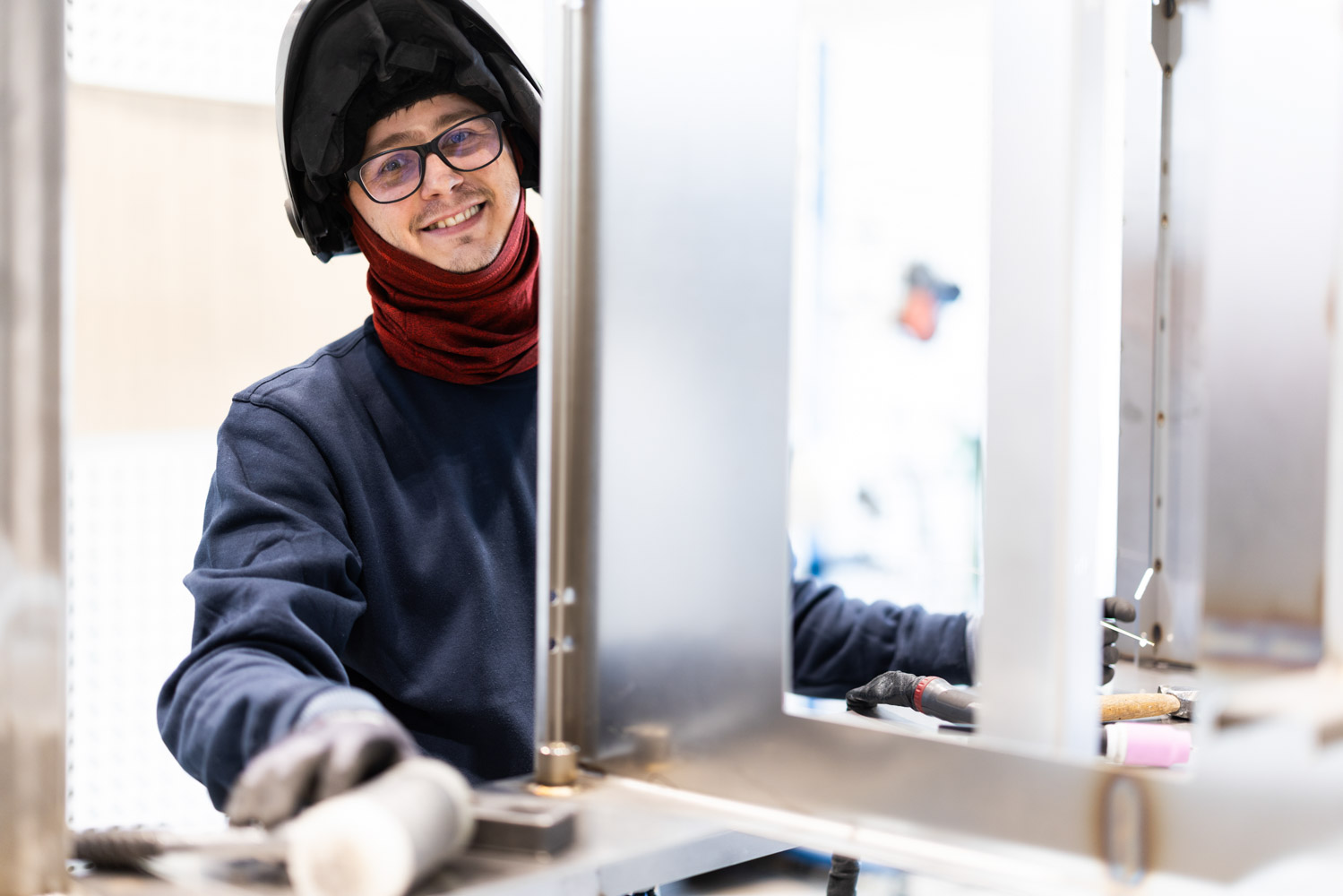
WPQR is the welding procedure qualification, the actual documentation that qualifies a welding procedure. It is therefore the formal confirmation that a WPS is approved for use.
The WPQR also documents that the WPS is qualified according to standards, such as ISO 15614-1. If the welding procedure is to be according to ASME, the qualification document is called PQR. The WPQR is according to the ISO/EN system.
To qualify an approved WPS, an approval test must be carried out (cf. NS-EN ISO 15614-1 (steel) and 15614-2 (aluminum with alloys).
First, a preliminary welding procedure, pWPS (preliminary welding procedure), is created. This is used by the welding inspectors, who weld a test joint that meets the requirements for quality and mechanical properties.
The result is documented in the WPQR, which contains the actual parameters used during the test weld, in addition to results from mechanical testing and non-destructive testing (NDT). If the test weld passes the requirements of the standard, the WPQR is the basis for approving the welding procedure, i.e. the WPS.
In some projects, customer requirements, the PED directive, class rules or other regulations may require that the qualification be monitored or approved by an independent body.
After welding, inspection and any NDT is carried out in accordance with applicable standards, project requirements and control plans.
WPAR (Welding Procedure Approval Record) is an older term that largely corresponds to today's WPQR term.
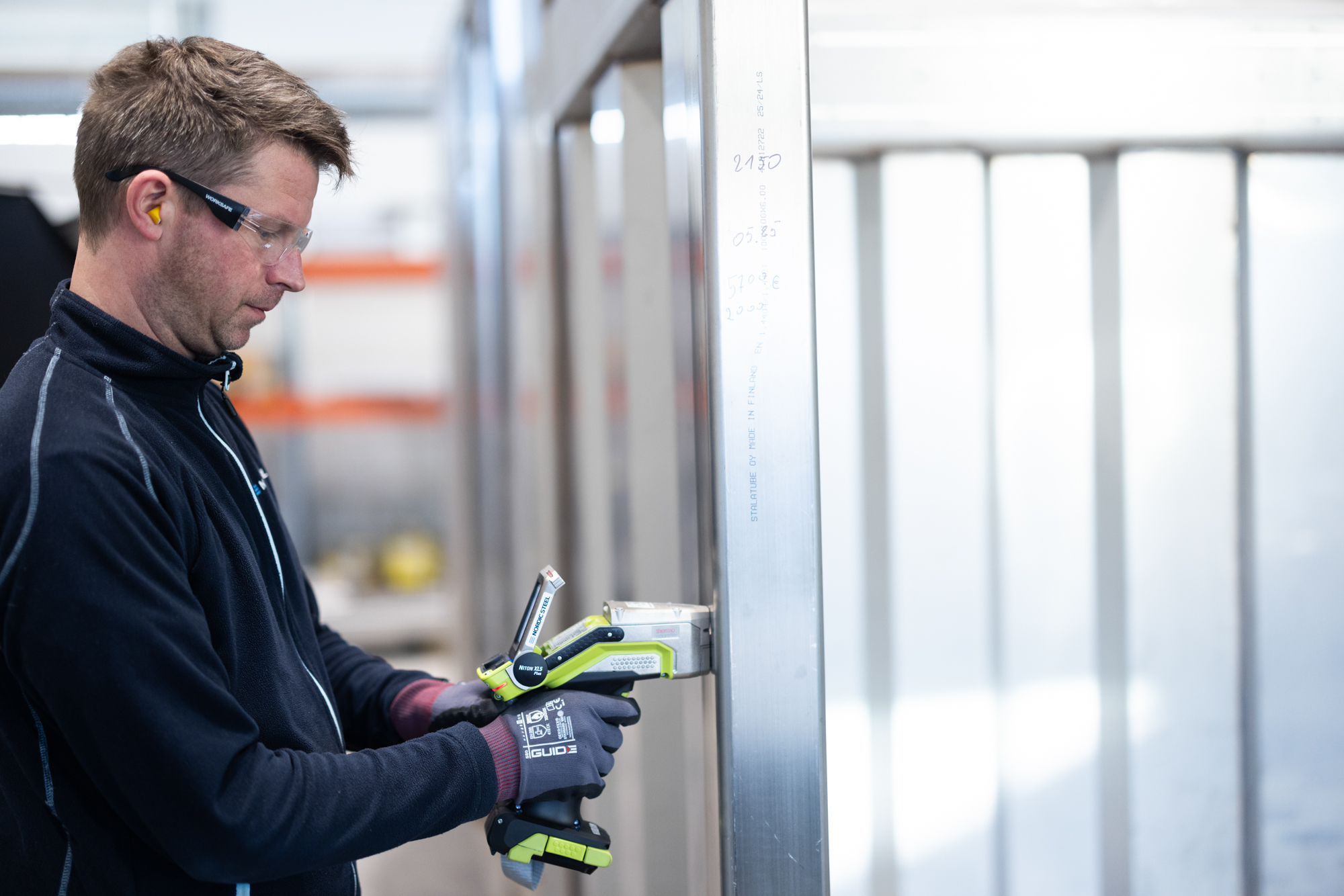
When the welding inspector approves the weld, material testing of the welds (NDT and DT) is carried out.
NDT methods are used to find surface and internal defects in the material/sample. Common tests are X-ray (RT), ultrasound (UT), magnetic particle inspection (MT) and penetrant inspection (PT). NDT is normally performed by personnel certified according to EN ISO 9712 or equivalent requirements defined in applicable regulations or contracts.
Once NDT has been approved, the weld samples must undergo destructive testing in a laboratory. Destructive testing (DT) is a test in which the specimen is destroyed or deformed to measure the mechanical properties and quality of the material. Some examples of what is done in a DT are tensile testing, bending testing, impact testing, hardness testing and macro-grinding/macro-testing (cutting open the weld to see the structure).
When the tests show that the requirements of the applicable standard are met, an approved welding procedure qualification (WPQR) is prepared.
Even if a welding procedure is qualified through a WPQR, the welder must also be qualified. Welding tests are normally carried out according to EN ISO 9606-1 for steel and document that the welder can perform the process in practice.
The work on welding procedures is part of the quality management for welding according to ISO 3834. The standard sets requirements for competence, documentation, traceability and control of welding processes.
Nordic Steel has professionals with the right expertise to perform all types of welding assignments. Contact us if you have any questions about welding and welding procedures.

Sources: Kiwa, The Welding Institute, Rosmo, R. (2023, November 27). Welding procedures. NDLA. https://ndla.no/r/produksjon-og-tjenester-tp-tip-vg1/sveisepostyderjer/191b86b45c



